Dental Implant Healing Stages at a Glance (Full Timeline)
Getting a dental implant is not a single event. It is a sequence of biological steps that unfolds over several months. Most people are surprised to learn that the visible part of recovery (swollen gums, a few sore days) is over quickly, while the most important part happens silently inside the jawbone where you cannot feel it.
This guide walks through every phase, hour by hour at the start and week by week after that. It explains what is normal, what is not, and the simple aftercare habits that protect your investment. Your dental team gives you instructions specific to your case. Use this as a map, not as a substitute for their advice.
The 4 healing stages and how long each lasts
There are four healing stages. Each one has a job to do, and each one sets up the next.
-
Stage 1: Immediate post-surgical recovery. The first 24 to 72 hours. Swelling, minor bleeding, and discomfort peak, then start to settle.
-
Stage 2: Soft tissue and gum healing. Days 3 to 14. The gum tissue around the implant closes and firms up. Sutures dissolve or are removed.
-
Stage 3: Osseointegration. Weeks 2 to month 6. The jawbone fuses directly to the titanium implant. This is the make-or-break phase, and it is mostly invisible.
-
Stage 4: Abutment, maturation, and the final crown. Months 3 to 6. A connector (abutment) is placed, the gum is shaped, and your permanent crown is fitted.
Total time from placement to final crown (3 to 6 months)
From the day the implant is placed to the day you bite down on the final crown, plan for roughly 3 to 6 months. Some straightforward cases finish closer to three months. Cases that need bone grafting first, or that heal more slowly, can run longer. The single biggest reason for the wait is osseointegration: bone is living tissue and it remodels on its own schedule. You cannot rush it, and you should not try to.
Dental implant healing stages timeline: what happens and how long it takes
| Stage |
Typical timing |
What happens |
How you feel |
| 1. Post-surgical recovery |
0-72 hours |
Clot forms, swelling and bleeding peak |
Sore, swollen, tired |
| 2. Gum (soft tissue) healing |
Days 3-14 |
Gum closes, sutures dissolve or come out |
Mild tenderness, improving daily |
| 3. Osseointegration |
Weeks 2 to month 6 |
Jawbone fuses directly to titanium |
Little to nothing; quiet phase |
| 4. Abutment and final crown |
Months 3-6 |
Gum shaped, impressions, crown fitted |
Brief tenderness at fitting |
What changes the timeline (and what doesn't)
Several real factors lengthen healing: poor bone quality or low bone density, a bone graft done before or during placement, the implant location (the back of the lower jaw tends to integrate faster than the upper jaw), smoking, and health conditions such as poorly controlled diabetes. If you needed a graft first, read up on the dental bone graft healing stages because that timeline stacks on top of the implant timeline.
What does not meaningfully change the timeline: how badly you want it to be over. No food, rinse, gadget, or supplement makes bone fuse faster on its own. What you can control is giving the bone the best possible conditions to do its work, and that is mostly about protecting the site and supporting your general nutrition.
Stage 1: Immediate Post-Surgical Recovery (First 24 to 72 Hours)
The first three days are the most uncomfortable, and also the shortest part of the whole process. A blood clot forms over the surgical site within hours. That clot is the foundation for everything that follows, so the entire goal of these first days is simple: protect it.
What's normal: swelling, bleeding, and discomfort peak
Some oozing of blood mixed with saliva for the first day is normal. Swelling typically peaks around 48 to 72 hours, not on day one, so do not be alarmed if your cheek looks worse on day two than right after surgery. Mild bruising can appear. Discomfort is usually manageable with the medication your dentist recommends. A low-grade ache is expected. Throbbing, escalating pain after day three is not, and is worth a call.
The first 24 hours, hour by hour
-
Hours 0-2: Bite gently on the gauze your dentist placed. Do not talk or spit much. Rest.
-
Hours 2-6: Change gauze if needed. Start cold compresses on the cheek, 20 minutes on and 20 minutes off, to limit swelling.
-
Hours 6-12: Sip cool water and have cold, soft foods such as yogurt or smoothie from a spoon. No straws. No hot liquids.
-
Hours 12-24: Keep your head slightly elevated when lying down. Take medication on schedule rather than waiting for pain to spike.
Aftercare that protects the clot and the implant
Do not rinse vigorously, spit forcefully, or use a straw for the first 24 hours, because the suction and pressure can dislodge the clot. After 24 hours, gentle warm salt-water rinses help keep the area clean. Avoid touching the site with your tongue or fingers. Do not smoke. Keep the rest of your mouth clean by brushing your other teeth normally and staying away from the surgical area.
Stage 2: Soft Tissue and Gum Healing (Days 3 to 14)
By around day three, the worst is behind most people. Over the next week and a half, the gum tissue around the implant knits together and firms up. This stage is mostly visible healing, and it is when life starts feeling normal again.
What your implant site should look like after 1 to 2 weeks
After one to two weeks, the gum around the site should look pink (or pinkish, with maybe a slightly paler ring near the healing cap), be closing or closed, and feel progressively less tender. Mild residual swelling can linger. What you should not see at two weeks: spreading redness, growing swelling, pus, a bad taste that will not go away, or a wobbly implant. Those point to a problem and need a dentist's eyes. If you want a visual reference for each milestone, see our day-by-day guide to what dental implant healing stages pictures actually show. If your case involved soft tissue work, the appearance overlaps with what you would expect during gum graft recovery.
Sutures, diet, and oral hygiene during gum healing
Many dentists use dissolvable sutures that disappear on their own over one to two weeks. Non-dissolvable stitches are usually removed at a follow-up around day 7 to 14. Keep eating soft foods and chew on the opposite side. Continue gentle salt-water rinses after meals. You can usually resume brushing near (not on) the site carefully, and your dentist may suggest a soft brush or a prescribed rinse.
Returning to work and normal activity
Most people with desk-based jobs return to work within 1 to 3 days. If your job is physically demanding or involves heavy lifting, give yourself longer, often closer to a week, because exertion raises blood pressure at the site and can disturb healing. Skip the gym, running, and strenuous exercise for at least the first few days, then ease back in.
Stage 3: Osseointegration, When Bone Fuses to the Implant (Weeks 2 to Month 6)
This is the heart of the whole process, and ironically the part you feel the least. After the gums look healed, the real work continues underneath for months.
What osseointegration actually is (bone-to-titanium bond)
Osseointegration is a direct, structural and functional connection between living bone and the surface of the titanium implant. The key word is direct. Living bone grows right up to and bonds onto the titanium, with no soft tissue layer in between. This is what lets the implant act like a tooth root and carry the force of chewing. It typically takes about 3 to 6 months to reach the strength needed to support a crown.
Why fibrous tissue at the interface means failure
Here is the part most guides skip. For an implant to succeed, the bond at the implant surface must be bone, and only bone. If soft, fibrous (collagen-rich scar-like) tissue forms between the implant and the bone instead, the implant does not lock in. It stays slightly mobile, and that is a failed integration. So while collagen is essential to bone as a tissue, you do not want any collagen layer at the metal surface itself. The goal at the interface is clean bone-to-titanium contact. If you ever face inflammation around an integrated implant later on, that is a separate issue covered under peri-implantitis treatment.
How to support bone integration day to day
You cannot direct osseointegration, but you can avoid sabotaging it and you can support your body's general bone-building machinery. The big protective moves: do not smoke, do not overload the implant by chewing on it before your dentist clears you, keep the area clean, and keep up with your follow-up visits so any problem is caught early. On the nutrition side, the jawbone the implant integrates into is, like all bone, roughly 30% collagen by tissue, and that collagen scaffold is what mineral attaches to. Supporting your body's normal collagen formation through good overall nutrition is reasonable background care, framed as an adjunct to (never a replacement for) your clinical plan.
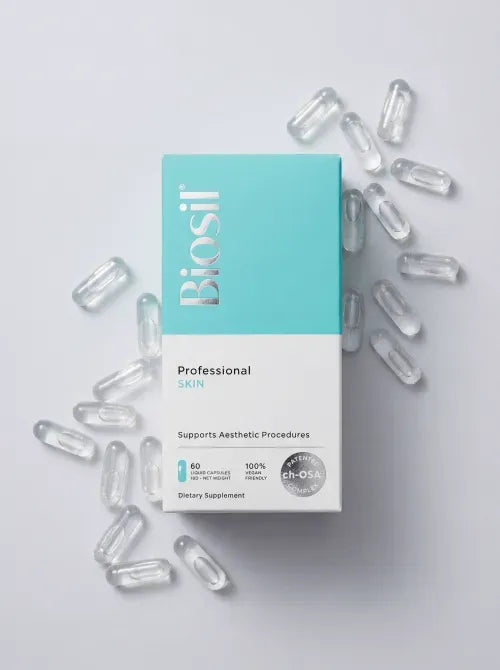
Where ch-OSA® fits: bone is about 30% collagen, and silicon is a cofactor your body uses to build that collagen scaffold. ch-OSA® supports your body's own collagen formation in bone generally. It does not act at the titanium surface and is an adjunct to clinical care.
New to this molecule? What is ch-OSA®?
Stage 4: Abutment, Maturation, and the Final Crown (Months 3 to 6)
Once your dentist confirms the implant has integrated, you enter the restorative phase. The hard waiting is done, and the finishing touches begin.
Healing abutment and gum contouring
A healing abutment (a small connector that pokes through the gum) is attached to the implant. Its job is to shape, or contour, the gum tissue into a natural-looking collar around where the crown will sit. This usually involves a short, minor procedure and a couple of weeks of gum maturation. Tenderness here is brief and mild compared with the original surgery.
Impressions and final crown placement
When the gum is shaped, your dentist takes impressions or a digital scan of the area. A dental lab builds a custom crown to match your bite and your neighboring teeth in shape and shade. At the final visit, the crown is attached to the abutment. There may be a quick check of your bite and minor adjustments. Most people walk out chewing on it the same day, carefully at first. Our walkthrough of dental implants before and after covers what really changes, and when.
Transitioning back to a full diet
Even with the crown in place, ease back into hard and chewy foods over a few days as the gum collar settles. Within a week or two, the implant should feel like a normal tooth. From there, treat it like one: brush, floss (or use the cleaning aid your dentist recommends), and keep your checkups. For the long game, see our guide on how to take care of implants for the long run.
Day-by-Day and Week-by-Week Recovery Guide
For people who like a concrete schedule, here is the recovery laid out as a checklist. Yours may run a day or two faster or slower.
Day 1 to Day 7: what to expect each 24 hours
Day-by-day dental implant recovery: appearance, symptoms, and what to do
| Day |
What you may notice |
What to do |
| Day 1 |
Light bleeding, numbness fading, ache begins |
Gauze, rest, cold compress, soft cold food, no straws |
| Day 2 |
Swelling and bruising rising toward peak |
Continue cold compress, medication on schedule |
| Day 3 |
Swelling at or just past its peak |
Start gentle warm salt-water rinses, soft food |
| Day 4 |
Swelling easing, comfort improving |
Switch cold compress to warm if bruised, light activity |
| Day 5 |
Mostly mild tenderness |
Most desk workers back at work, keep chewing opposite side |
| Day 6 |
Site looking cleaner and pinker |
Maintain rinses and soft diet |
| Day 7 |
Possible suture removal visit |
Attend follow-up, ask any questions |
Week 2 to Month 6: the long, quiet phase
-
Week 2: Gums largely healed on the surface. Sutures gone. You feel essentially normal.
-
Weeks 3-6: Nothing dramatic happens that you can feel. Bone is quietly remodeling around the implant. Keep the area clean and avoid chewing directly on it.
-
Months 2-3: Osseointegration is well underway. Routine life, normal diet on the rest of your teeth.
-
Months 3-6: Your dentist checks integration, then moves to the abutment and final crown.
Dental Implant Recovery: Diet and Aftercare Rules
Most healing problems trace back to two things: disturbing the site too early, and slowing your body's healing with avoidable habits. Diet and aftercare are where you have the most control.
Soft-food diet and how it evolves by stage
Early on, eat cool or lukewarm soft foods that need no chewing at the site: yogurt, smoothies (by spoon), mashed potato, scrambled eggs, soup that is not too hot, soft fish, oatmeal. As days pass and comfort returns, add softer solids, then gradually return to your normal diet by the second week, still avoiding chewing directly on the implant until cleared. Throughout, steer clear of hard, crunchy, sticky, and spicy foods that can lodge in or irritate the site. For more soft-food ideas that apply to oral surgery in general, see what to eat after wisdom teeth removal.
Why dentists say no dairy and no straws early on
These two rules confuse a lot of patients, so here is the reasoning:
-
No straws (first 24+ hours): sucking creates negative pressure in your mouth that can pull the protective blood clot out of the socket. Lose the clot and you risk a painful, slowed-healing site. Drink from the glass instead.
-
Going easy on dairy early: for many people, dairy products (especially after surgery and certain medications) can trigger nausea or upset stomach, and some clinicians worry about bacterial exposure to a fresh wound. It is less a hard biology rule than a comfort-and-caution measure, so follow your own dentist's specific instruction.
Smoking, alcohol, and habits that slow healing
Smoking is the single worst habit for implant healing. It reduces blood flow to the surgical site, which starves the area of the oxygen and nutrients healing depends on, and it measurably raises the risk of implant failure. Avoid it for as long as your dentist advises, ideally quit. Alcohol can interfere with medications and with clotting, so skip it in the early days. Also avoid vigorous rinsing, poking the site, and strenuous exercise too soon.
Dental Implant Healing Stages and Pain: How Painful Is Recovery, Really?
This is the question almost everyone asks first. The honest answer: for most people, dental implant surgery is less painful than they feared, and the rough part is brief.
When pain peaks and when it should fade
Discomfort is usually worst in the first 24 to 72 hours, tracking with the swelling. From around day three it should steadily improve, and by the end of the first week many people need little or no pain medication. Pain that is increasing after day three, rather than fading, is a signal to call your dentist.
Managing discomfort safely
Take the pain relief your dentist recommends on a schedule rather than waiting for pain to return. Use cold compresses in the first 48 hours. Rest with your head elevated. Keep up gentle salt-water rinses after the first day. Do not exceed dosing instructions, and ask before combining medications.
The worst part of recovery (and why it's short)
For most patients the worst part is not pain at all. It is the swelling and the soft-food restriction during the first few days, plus the general tiredness right after surgery. That phase is short, typically two to three days of feeling rough, then steady improvement. The long osseointegration phase that follows is the opposite of the worst part: you barely notice it.
Normal Healing vs. Warning Signs of Implant Failure
Knowing the difference between normal healing and a warning sign saves you worry and, occasionally, saves the implant.
Green flags: how to know you're healing correctly
- Swelling and discomfort that peak early then decline day by day.
- Gum around the site looking progressively pinker and closing up.
- Less bleeding, then none.
- The implant or healing cap feeling stable, not loose.
- Being able to eat soft foods more comfortably each day.
Red flags: when to call your dentist immediately
- Severe or worsening pain after day three.
- Swelling that grows rather than shrinks after day three.
- Pus, a foul taste, or a bad smell from the site.
- Fever or feeling generally unwell.
- The implant feeling loose or moving.
- Bleeding that will not stop with gentle pressure.
Factors that raise the risk of implant failure
Some factors increase risk regardless of how careful you are: smoking, poorly controlled diabetes, low bone density or insufficient bone volume, certain medications, untreated gum disease, and grinding or clenching that overloads the implant. Most of these can be managed if your dentist knows about them up front. Despite all this, dental implants have a high long-term success rate, commonly cited around 95 to 98%.
Full-Mouth and Multiple Implant Healing (How It Differs)
If you are replacing many teeth or a full arch, the healing story has some important differences, and a few pleasant surprises.
Why full-arch timelines can feel faster with temporaries
The underlying biology is the same: bone still needs about 3 to 6 months to fully integrate around each implant. What feels faster is the experience, because many full-arch cases get a temporary fixed bridge early so you are not without teeth during the wait. You leave with a working smile while integration happens underneath. The final permanent restoration still goes on after integration is confirmed.
All-on-4 and immediate-load healing expectations
All-on-4 and similar immediate-load approaches place a full set of teeth on four (sometimes more) implants, often with a temporary attached the same day. This works because the implants are angled and positioned to share load and stay stable while bone integrates. Even so, the early aftercare is stricter in some ways: you stick to soft foods longer to avoid stressing implants that are still integrating, and you follow a careful cleaning routine. The quiet osseointegration months are still the foundation under that immediate, confident-looking smile.
Sources
- Teughels W, et al. The effect of choline-stabilized orthosilicic acid in patients with peri-implantitis: an exploratory randomized, double-blind, placebo-controlled study. BMC Oral Health. 2021. View source
- Parithimarkalaignan S, Padmanabhan TV. Osseointegration: An Update. J Indian Prosthodont Soc. 2013. View source
- Spector TD, et al. Choline-stabilized orthosilicic acid supplementation as an adjunct to calcium/vitamin D3 stimulates markers of bone formation in osteopenic females: a randomized, placebo-controlled trial. BMC Musculoskelet Disord. 2008;9:85. View source
- Reffitt DM, et al. Orthosilicic acid stimulates collagen type 1 synthesis and osteoblastic differentiation in human osteoblast-like cells in vitro (cell-culture study, not human or implant). Bone. 2003. View source
- Aspen Dental. Dental Implants Recovery and Healing Process. View source