Chemical Peel Aftercare | Biosil®
Chemical Peel Aftercare at a Glance (What to Expect by Peel Depth)
A chemical peel applies an acid solution that removes damaged outer skin so smoother, fresher skin can surface. How much aftercare you need depends almost entirely on the depth of the peel, so the first thing to know is which one you had.
Chemical peel recovery by depth: what to expect
| Peel depth |
Typical peeling and downtime |
How it feels |
| Superficial (light) |
Flaking for 1-3 days, little downtime |
Mild redness and tightness |
| Medium |
Peeling for 5-7 days, redness 1-2 weeks |
Noticeable shedding, early swelling |
| Deep |
Peeling 7-14 days, redness for weeks to months |
Significant downtime, needs medical supervision |
The First 24 to 72 Hours After a Chemical Peel
The early days are when the skin barrier is most vulnerable. The goal is to keep the area calm, clean, and protected while it starts to renew.
What is normal: redness, tightness, and mild stinging
Redness, a tight feeling, mild stinging, and warmth are all expected in the first day or two, and they are usually stronger with medium and deep peels. Skin often looks slightly darker or feels rough just before it begins to flake. This is the peel doing its job.
Cleansing and moisturizing gently
- Wash with a mild, non-foaming cleanser and lukewarm water, using your fingertips only. No washcloths, brushes, or scrubs.
- Apply the bland moisturizer your provider recommends to keep the skin comfortable and reduce tightness.
- Pat the skin dry, never rub. Keep your hands off the area.
Days 3 to 7: The Peeling Phase
Somewhere around day two or three, lighter and medium peels begin to flake. This is the most tempting stage to interfere with, and the most important one to leave alone.
Do not pick or peel the skin
Let the skin shed on its own schedule. Pulling flaking skin before it is ready can lift skin that is not finished healing, which risks scarring and uneven color. Keep the area moisturized so the flaking is less noticeable and more comfortable.
Managing flaking and dryness
Moisturize as often as the skin feels tight, and keep using a gentle cleanser. If flaking catches on clothing or looks dramatic, that is normal for a medium peel. Resist the urge to exfoliate it away.
What to Avoid While Your Skin Heals
Most peel complications come from two things: sun exposure and reintroducing strong products too soon. Use this as a simple do and avoid list.
Chemical peel aftercare: do and avoid
| Do |
Avoid |
| Use a gentle cleanser and a bland moisturizer |
Scrubbing, exfoliating, or picking at flaking skin |
| Wear broad-spectrum SPF and seek shade |
Direct sun, tanning beds, saunas, and hot yoga |
| Use only products your provider approves |
Retinoids, AHAs and BHAs, and vitamin C until cleared |
| Hydrate and rest |
Intense workouts and heavy sweating in the early days |
Sun, heat, and sweat
Freshly peeled skin is very sensitive to light and heat. Sun exposure in this window is the main cause of post-peel dark patches, so daily protection matters even indoors near windows.
Actives, retinoids, and exfoliants
Strong actives that are great for maintenance are too harsh for healing skin. Reintroduce them only when your provider says the barrier has recovered, usually after the peeling has finished.
Sun Protection and Long-Term Care
Once the skin has settled, sun protection becomes the single most important habit for keeping your result. Use a broad-spectrum SPF 30 or higher every day, reapply when outdoors, and add a hat and shade when you can. Consistent protection prevents pigmentation and helps the smoother skin you paid for last longer.
Warning Signs: When to Call Your Provider
Most recoveries are uneventful, but it helps to know the line between normal healing and a problem.
Normal healing versus warning signs after a chemical peel
| Normal |
Call your provider |
| Redness, tightness, and even flaking |
Spreading redness, heat, or swelling that worsens |
| Mild stinging that settles |
Severe or increasing pain, or blistering beyond what you were told to expect |
| Skin calming day by day |
Pus, oozing, or yellow crusting, which can signal infection |
| Gradual, tidy peeling |
Fever, or peeling that will not stop |
Skin Collagen and Where ch-OSA® Fits (General Nutrition, Not a Procedure Aid)
A chemical peel resurfaces the skin, and over the following weeks the skin renews the collagen framework that sits beneath the surface. Your body builds that collagen using several nutrients, and silicon is one cofactor involved. That is everyday skin biology, separate from the peel itself.
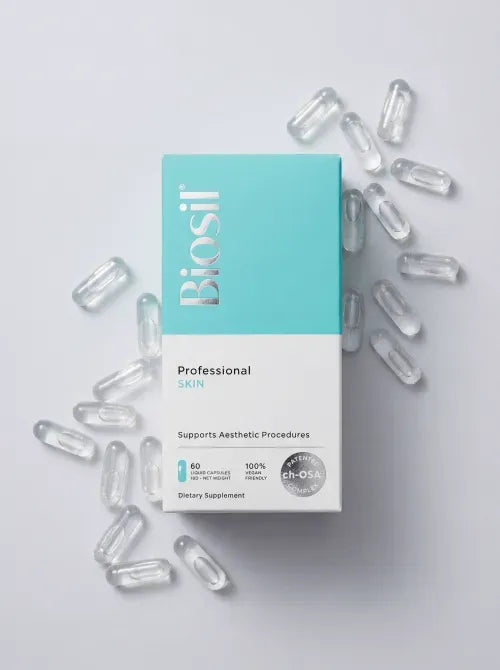
Biosil® provides ch-OSA® (choline-stabilized orthosilicic acid), a bioavailable silicon designed to help your body make its own collagen rather than eat pre-formed collagen. In a 20-week study in women with photodamaged skin, ch-OSA® was associated with a smoother skin surface and better elasticity (Barel 2005). New to the molecule? See What is ch-OSA®? and the peer-reviewed evidence.
Where ch-OSA® fits: your skin renews on a collagen framework, and silicon is a cofactor your body uses to build it. ch-OSA® supports your body's own collagen formation as general nutrition, not as a peel recovery aid. Discuss any supplement with your provider.
What this evidence does not say
- No study has tested ch-OSA® before or after a chemical peel or any similar procedure.
- The connection is shared collagen biology, not proof that ch-OSA® changes how a peel heals or performs.
- ch-OSA® is not shown to speed recovery, cut downtime, reduce redness or flaking, prevent pigmentation, or improve your peel results.
- The main human skin study (Barel 2005) was funded by the supplement's manufacturer, so independent confirmation is limited.
- ch-OSA® is a food supplement and an adjunct to professional care, never a replacement. Discuss any supplement with your provider before adding it.
Follow your provider's aftercare plan first, and treat general skin nutrition as background support rather than part of the procedure. You may also want to read our guide to collagen induction therapy, another collagen-focused resurfacing approach, or browse the full Biosil® aesthetic collagen guides.
Sources
- Cleveland Clinic. Chemical Peels: Types of Peels, Conditions Treated, What to Expect. View source
- O'Connor AA, et al. Chemical Peels for Skin Resurfacing. StatPearls. NCBI Bookshelf. View source
- Reffitt DM, et al. Orthosilicic acid stimulates collagen type 1 synthesis and osteoblastic differentiation in human osteoblast-like cells in vitro (cell-culture study, not human skin or a procedure). Bone. 2003. View source
- Barel A, et al. Effect of oral intake of choline-stabilized orthosilicic acid on skin, nails and hair in women with photodamaged skin (manufacturer-funded). Arch Dermatol Res. 2005. View source