Tummy Tuck Recovery Time at a Glance
A tummy tuck (abdominoplasty) tightens the abdominal wall and removes loose skin, so the recovery is more demanding than most cosmetic procedures. The honest headline: the first two weeks ask a lot of you, and full recovery takes about six weeks. After that, the scar and final shape keep refining for months.
This guide lays out the recovery week by week: what is normal, what is not, and the habits that protect your result. Your surgeon gives you instructions specific to your case, including whether muscle repair was done. Use this as a map, not as a replacement for their advice. For the wider set of procedure timelines, see our aesthetic recovery guides.
Tummy tuck recovery time: the main phases and how long each lasts
| Phase |
Typical timing |
What is happening |
How you feel |
| 1. Early recovery |
0-7 days |
Drains in place, compression garment on, walking bent at the waist |
Sore, tight, low energy |
| 2. Turning the corner |
Week 2 |
Drains often out, standing straighter, moving more easily |
Improving day by day |
| 3. Building up |
Weeks 3-6 |
Gradual return to daily activity, still no heavy lifting |
Much more normal |
| 4. Full activity |
Around week 6 |
Core and exercise resume on surgeon clearance |
Back to routine |
| 5. Scar and final shape |
Months 3-12 |
Swelling fully resolves, scar softens and fades |
Fully recovered |
The First Week: The Hardest Stretch
The first week is the most limiting part of the whole recovery. Expect to move slowly, rest often, and lean on help at home for daily tasks.
Drains, garment, and posture
You will likely have one or two small surgical drains to remove excess fluid, and a compression garment to support the tissues and manage swelling. Because the abdominal skin and muscle are tightened, you walk slightly bent at the waist for the first week or two to keep tension off the incision. Standing fully upright too early pulls on the repair, so ease into it.
Walking early matters
Short, gentle walks from the first day or two are important. Early movement supports circulation and lowers the risk of blood clots in the legs, which is a key safety concern after abdominal surgery. Walk little and often, but avoid anything strenuous.
Week 2: Turning the Corner
By the second week most people feel meaningfully better. Drains are often removed within one to two weeks once output drops, movement gets easier, and you begin to straighten up toward standing fully upright.
Returning to light activity and work
Many people return to light, desk-based work around two weeks, provided the job does not involve lifting or straining. Keep wearing the compression garment as directed and continue short walks. You will still tire easily and should not lift anything heavy.
Weeks 3 to 6: Building Back Up
Weeks three to six are a steady climb back to normal. Everyday activities get easier, but the repaired abdominal wall still needs protection. Avoid heavy lifting, core exercises, and strenuous workouts until your surgeon clears you, usually around the six-week mark. Swelling continues to come and go and is often worse at the end of the day.
Weeks 6 to 12 and Beyond: Scar and Final Shape
Around six weeks most surgeons clear a gradual return to full exercise, including core work, if healing is on track. The final shape keeps refining as residual swelling resolves over three to six months. The scar sits low, usually below the bikini line, and matures over six to twelve months, fading and flattening. Sun protection and not smoking are the two habits that most protect how it heals.
Tummy tuck recovery week by week: what you may notice and what to do
| Time |
What you may notice |
What to do |
| Days 1-7 |
Soreness, tightness, drains, walking bent over |
Walk little and often, wear the garment, rest, no lifting |
| Week 2 |
Drains often removed, standing straighter |
Light desk work if cleared, keep short walks |
| Weeks 3-6 |
More energy, swelling comes and goes |
Daily activity yes, heavy lifting and core no |
| Around week 6 |
Feeling largely normal |
Resume exercise on surgeon clearance |
| Months 3-12 |
Scar softening, final shape settling |
Sun protection, scar care, no smoking |
Drains, Compression Garment, and Your Incision
Three things confuse most patients, so here is the reasoning. Drains remove fluid that would otherwise collect under the skin, and come out when the daily amount is low enough. The compression garment supports the tightened tissues, helps skin settle against the abdominal wall, and manages swelling, which is why it is worn most of the day for about six weeks. The incision runs low across the abdomen and, when a repair of the abdominal muscles is done, an internal repair forms there too, which is part of why lifting is restricted.
Normal Healing vs Warning Signs
Most of a tummy tuck recovery is uneventful, but abdominal surgery carries a real clot risk, so a few warning signs deserve fast action.
Green flags: you are healing as expected
- Soreness and tightness that ease week by week.
- Drain output that steadily decreases before removal.
- Swelling that fluctuates but trends down over weeks.
- An incision that stays clean and dry, with no spreading redness.
Red flags: seek care promptly
- Swelling, pain, or tenderness in one calf or leg, which can signal a blood clot.
- Chest pain or shortness of breath, which is an emergency.
- Fever, spreading redness, pus, or a foul or heavy discharge from the incision.
- A wound that opens or separates, or a sudden increase in firm swelling.
How to Support Your Recovery
You cannot rush wound healing, but you can give your body the best conditions and avoid setting it back. Walk early and often, wear your garment as directed, stay hydrated, eat well with enough protein, do not smoke, and keep every follow-up so problems are caught early.
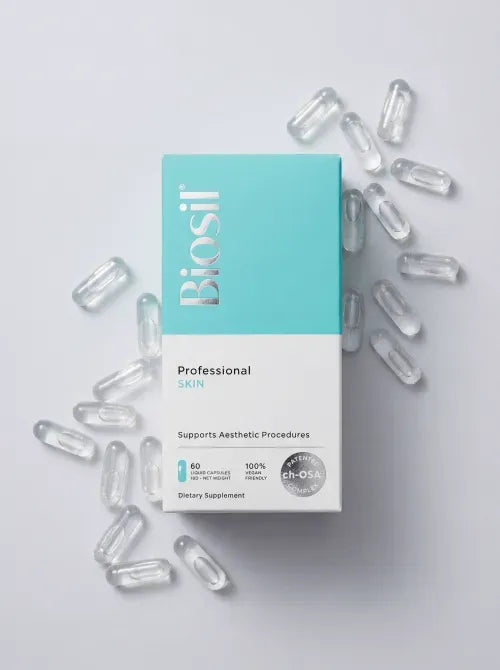
Skin and the connective tissue of the abdominal wall are built largely from collagen, and the body rebuilds and remodels collagen throughout healing in general. Supporting your body's normal collagen formation through good overall nutrition is reasonable background care, framed as an adjunct to, never a replacement for, your surgeon's plan. To understand the molecule behind Biosil®, read what ch-OSA® is, and you can review the underlying studies on our peer-reviewed evidence page.
Where ch-OSA® from Biosil® fits: skin and connective tissue are largely collagen, and ch-OSA® provides bioavailable silicon your body uses to make its own collagen. This is general connective-tissue nutrition, an adjunct only. Discuss any supplement with your surgeon.
Recovering from a different procedure? See our guide to facelift recovery time.
What This Guide (and ch-OSA®) Does Not Claim
Honesty matters on a page like this, so here is what we are not saying.
- No supplement, including ch-OSA®, has been shown to speed tummy tuck recovery, reduce swelling or bruising, shorten downtime, or improve your scar or surgical result.
- There is no ch-OSA® study in tummy tuck or any cosmetic-surgery recovery. The collagen science here comes from skin and cell-culture research and is applied by reasoning, not proven for surgery.
- ch-OSA® is general connective-tissue nutrition and an adjunct only. Do not start, stop, or change any supplement before or after surgery without your surgeon's approval, and always follow your surgeon's instructions.
- These statements have not been evaluated by the Food and Drug Administration. This product is not intended to diagnose, treat, cure, or prevent any disease.
Sources
- American Society of Plastic Surgeons. Tummy tuck recovery. View source
- American Society of Plastic Surgeons. Tummy tuck overview. View source
- Barel A, Calomme M, Timchenko A, et al. Effect of oral intake of choline-stabilized orthosilicic acid on skin, nails and hair in women with photodamaged skin (skin study, not surgery). Arch Dermatol Res. 2005;297(4):147-153. View source
- Reffitt DM, et al. Orthosilicic acid stimulates collagen type 1 synthesis and osteoblastic differentiation in human osteoblast-like cells in vitro (cell-culture study, not human, not surgery). Bone. 2003. View source
- Spector TD, et al. Choline-stabilized orthosilicic acid supplementation as an adjunct to calcium/vitamin D3 stimulates markers of bone formation in osteopenic females. BMC Musculoskelet Disord. 2008;9:85. View source