Gum Graft Recovery at a Glance
A gum graft is a common periodontal procedure used to cover exposed roots and rebuild gum tissue lost to recession. The good news for most patients: the worst of it is short. The first few days are the most uncomfortable, then things improve steadily. Below is the honest picture, with no hype and no scare tactics.
How long gum graft recovery takes (comfort vs. full healing)
It helps to separate two different clocks. The first is comfort: how long until you feel mostly normal. The second is biology: how long the tissue actually takes to fully heal and mature. They are not the same. You will feel fine long before the graft is finished healing under the surface.
For comfort, most patients turn a corner within 1 to 2 weeks. For functional healing, where the graft is stable and you can chew more normally, plan on about 4 to 6 weeks. For full tissue maturation, where the color and texture settle and the graft fully integrates, the timeline is roughly 3 to 6 months. Your periodontist will track this at follow-up visits.
Is a gum graft major surgery?
No. A gum graft is minor oral surgery. It is usually performed in the periodontist's office under local anesthesia, often with the option of light sedation, and you go home the same day. It is precise work, but it is not a hospital procedure and it does not require general anesthesia in most cases. That said, "minor" does not mean "no recovery." You still need to protect the site carefully.
What recovery feels like, day by day (summary)
Here is the short version that most patients want first. The detailed stage-by-stage breakdown follows below.
| Stage |
Timeframe |
What to expect |
| Acute phase |
Days 1-3 |
Peak swelling and discomfort, some oozing, soft and cool foods only |
| Early healing |
Days 4-14 |
Swelling fades, graft looks pale, comfort returns, warm soft foods |
| Normal function |
Weeks 3-6 |
Most restrictions lift, solids reintroduced, site looks pinker |
| Full maturation |
Months 3-6 |
Color and texture settle, graft fully integrates with surrounding gum |
Gum Graft Recovery Timeline: Stage by Stage
This is the heart of the gum graft recovery timeline. Each stage has its own goals and its own do's and don'ts. The single most important rule across every stage: do not disturb the graft. The new tissue depends on a fragile blood supply forming in the first days, and physical disruption is the most common cause of trouble. If you would rather see these same stages laid out as dates you can count off, our day-by-day and week-by-week gum graft schedule maps them onto a calendar.
Days 1 to 3: The acute phase (peak swelling and discomfort)
These are the toughest days. Swelling typically peaks around day 2 or 3, not on the day of surgery, which surprises many patients. You may notice minor oozing or pink-tinged saliva, which is normal. Bite gently on gauze if your surgeon instructed you to, and use ice on the outside of your face in intervals.
Eat only soft, cool foods. Avoid anything hot, spicy, crunchy, or chewy. Do not use straws, because the suction can dislodge the clot that protects the graft. Keep talking to a minimum on day one to avoid stretching the area. Sleep with your head slightly elevated to reduce swelling. Take pain medication on the schedule your periodontist gave you rather than waiting for pain to spike.
Days 4 to 14: Early healing and stabilization
By day 4, most people feel a clear improvement. Swelling starts to recede and sharp discomfort fades into mild tenderness. The graft is beginning to establish its blood supply and bond to the recipient site. This is when the graft often looks white or pale, which is expected and covered in detail below.
You can start adding warm (not hot) soft foods. Continue to avoid chewing directly on the graft. If you have stitches, do not pick at them. Some sutures dissolve on their own, while others are removed at a follow-up around the 1 to 2 week mark. Resist the urge to inspect the site constantly with your tongue or fingers, because that delays stabilization.
Weeks 3 to 6: Returning to normal function
By week 3, the graft is much more stable and most daily restrictions begin to lift. The tissue starts shifting from pale toward a healthier pink as new blood vessels mature. You can gradually reintroduce more solid foods, chewing carefully and favoring the other side of your mouth near the site. Gentle brushing of the graft area usually resumes with your periodontist's guidance during this window.
This functional-recovery window is similar in spirit to other oral healing journeys. If you want to compare how soft-tissue and bone heal differently, our guides on dental implant healing stages and dental bone graft healing stages walk through those distinct timelines.
Months 3 to 12: Full tissue maturation
Comfort returns long before maturation finishes. Over months 3 to 6, and sometimes out to a year, the graft continues to remodel: the color evens out, the texture blends with surrounding gum, and the new tissue strengthens its attachment. You will not feel this happening. Your final follow-up visits confirm the graft has taken and is doing its job of covering the root and adding durable tissue. For a closer look at what actually changes between the day of surgery and the finished result, our guide on gum graft before and after covers it.
What Your Gum Graft Should Look Like While Healing
One of the most searched and least answered questions is simply: what is this supposed to look like? Patients open their mouth on day 5, see a pale patch and raw-looking tissue, and quietly panic. Most of what looks alarming is completely normal. Here is how to read the visual changes. For a phase-by-phase view of what the tissue looks like at each point, see our guide on gum graft healing stages.
Why the graft may look white or pale (and why that is normal)
In the first one to two weeks, a graft commonly looks white, gray-white, or pale. This is not infection and it is not the graft dying. The pale appearance often reflects the surface healing tissue and the temporary state of the blood supply as new vessels grow in. As circulation establishes, the color shifts toward pink. A white graft in week one is one of the most normal things you will see.
How blood clots form and protect the graft
Right after surgery, a blood clot forms and acts as a protective seal and a scaffold for healing. This clot is fragile in the first few days. Suction from a straw, vigorous rinsing, smoking, or poking the site can dislodge it, which is exactly why those actions are off limits early on. Protecting the clot is the single highest-leverage thing you can do for a clean recovery.
Color and texture changes week by week
| Timeframe |
Typical appearance |
What it means |
| Days 1-3 |
Red, slightly swollen, possible oozing, sutures visible |
Fresh wound, clot forming |
| Days 4-14 |
White or pale patch, may look raw |
Surface healing, blood supply establishing (normal) |
| Weeks 3-6 |
Shifting from pale to pink, firmer |
New blood vessels maturing, tissue stabilizing |
| Months 3-6 |
Pink, blended texture, matching nearby gum |
Graft maturing and integrating |
Normal healing vs. signs something is wrong
Normal: a white or pale graft, mild swelling, tenderness, pink-tinged saliva, and a sore palate. Worth a call to your periodontist: increasing (not decreasing) pain after day 3 or 4, fever, pus or a foul taste, heavy bleeding that does not stop with gentle pressure, or a graft that turns dark and detaches. When in doubt, call. Reassurance is free, and your periodontist would rather hear from you early.
Healing the Palate Donor Site (Roof of the Mouth)
Here is something many patients are not warned about clearly: the donor site on the roof of your mouth can be the sorest part of the whole recovery, often more bothersome than the graft itself. This depends heavily on the type of graft you had.
Why the donor site can be the sorest part
When tissue is harvested from your palate, it leaves a wound that has to heal on its own, sometimes as an open area protected by a dressing or a stent. The palate has a rich nerve supply, so it is sensitive, and it sits right where your tongue and food constantly touch. That combination makes it tender and easy to irritate.
When palate pain peaks and how to manage it
Palate discomfort usually peaks in the first few days and then eases over the first one to two weeks as the surface heals. Helpful steps: eat on the opposite side, avoid sharp or crunchy foods that can scrape it, keep it clean with gentle saltwater rinses once your surgeon approves, and wear any protective stent exactly as instructed. The palate is often slower to feel normal than the graft site, so be patient with it.
Free gingival vs. connective tissue vs. AlloDerm: how the donor site differs
Your graft type largely determines whether you have a palate wound at all, and how much it hurts. This is the detail most pages skip.
-
Free gingival graft: takes surface tissue from the palate, leaving an open wound. This is usually the most uncomfortable donor site.
-
Connective tissue graft: takes tissue from under a flap of the palate, which is then sutured closed. Less open wound, generally less palate pain.
-
Pedicle graft: uses nearby gum tissue moved over, sometimes avoiding the palate entirely.
-
AlloDerm or donor tissue: uses processed donor tissue instead of your own, so there is no palate harvest site and no second wound to heal.
If you do not know which type you had, ask. It directly changes what your recovery should feel like. Our breakdown of gingival graft healing by graft type compares free gingival, connective tissue, and donor tissue side by side.
What to Eat During Gum Graft Recovery
Diet is one of the few things fully in your control, and it matters. The goal is simple: nourish your body while never disturbing the graft. Soft, cool, and gentle early, then a careful return to normal.
Days 1 to 3: soft, cool foods only
Stick to cool or room-temperature soft foods that need no chewing: yogurt, smoothies eaten with a spoon (no straw), applesauce, mashed potatoes that have cooled, cottage cheese, blended soups served lukewarm, and well-cooked oatmeal. Avoid anything that requires real chewing and anything with small seeds or sharp edges that could lodge in the site.
Days 4 to 14: adding warm soft foods
As comfort improves, you can move to warm (not hot) soft foods: scrambled eggs, soft pasta, flaky fish, well-cooked vegetables, and tender stewed meats cut small. Keep chewing away from the graft. Protein and a varied diet support your body's general healing capacity during this window. For a fuller list of gentle options that overlap with this stage, see our guide on what to eat after wisdom teeth removal.
Weeks 3 plus: reintroducing solids safely
From around week 3, with your periodontist's okay, you can gradually return to a normal diet. Reintroduce firmer foods one at a time, chew slowly, and stay off the graft side until you are confident the area is stable. If something causes sharp pain, back off and give it more time.
Foods and habits to avoid (no straws, no hot/spicy/crunchy)
-
No straws. Suction can dislodge the clot or graft. This is the rule patients most often forget.
-
No hot foods or drinks in the early days, which can increase bleeding and irritation.
-
No spicy foods that sting the wound.
-
No crunchy, hard, or seedy foods (chips, nuts, popcorn, crusty bread) that can scrape or embed.
-
No alcohol while on pain medication and during early healing.
-
No smoking or vaping, which significantly impairs healing.
Managing Pain, Swelling, and Bleeding
Discomfort is expected and manageable. Knowing the pattern helps you stay calm and stay ahead of it. If your real question is whether the procedure itself hurts, our guide on whether gum grafting is painful covers before, during, and right after.
What is the most painful day after a gum graft?
For most patients, the most painful stretch is the first 2 to 3 days, with discomfort and swelling often peaking around day 2 or 3 rather than on surgery day. After that, it improves steadily. If pain is increasing rather than decreasing after day 3 or 4, that is a reason to call your periodontist.
Ice and medication schedule
Apply ice to the outside of your face in intervals (a common pattern is about 20 minutes on, 20 minutes off) during the first 24 to 48 hours to limit swelling. Take pain relief on the schedule your periodontist prescribes, and do not wait for pain to become severe before dosing. Over-the-counter options are often enough; follow your provider's specific instructions and never exceed labeled or prescribed limits.
How long bleeding and swelling normally last
Minor oozing and pink saliva can occur for the first day or so. Frank bleeding should be light and controllable with gentle gauze pressure. Swelling builds for 2 to 3 days, then subsides over the following several days to two weeks. Bleeding that is heavy or will not stop, or swelling that worsens after day 3, warrants a call.
Oral Care and Daily Activity During Recovery
How you care for your mouth in the first weeks has a direct effect on results. The theme is gentleness and patience.
When and how to brush, floss, and rinse near the graft
Keep brushing the rest of your mouth as usual, but avoid the graft site itself in the early days. Do not brush or floss directly over the graft until your periodontist clears you, usually starting gently in the first couple of weeks. For rinsing, avoid vigorous swishing early on. Gentle saltwater rinses or a prescribed antimicrobial rinse, used as directed, help keep the area clean without disrupting it.
Why to avoid electric toothbrushes and water flossers near the site
Skip electric toothbrushes and water flossers (Waterpik-style devices) near the graft for several weeks. The vibration and pressurized water can disturb the fragile new tissue and the protective clot. A soft manual brush, used gently and away from the site, is the safer choice during early healing. Reintroduce powered tools only when your periodontist says the area can handle it.
How many days off work and when to resume exercise
Most patients take 1 to 2 days off work or school. Desk-based work is often manageable the next day if you feel up to it. Hold off on strenuous exercise, heavy lifting, and anything that raises your heart rate and blood pressure for about a week, since that can increase bleeding and swelling. Ease back in gradually.
Talking, sleeping, and other day-one limits
On day one, minimize talking to avoid stretching the surgical area, and sleep with your head elevated to reduce swelling and throbbing. Avoid pulling your lip or cheek to "check" the graft in a mirror, which can stress the sutures. Treat day one as a true rest day.
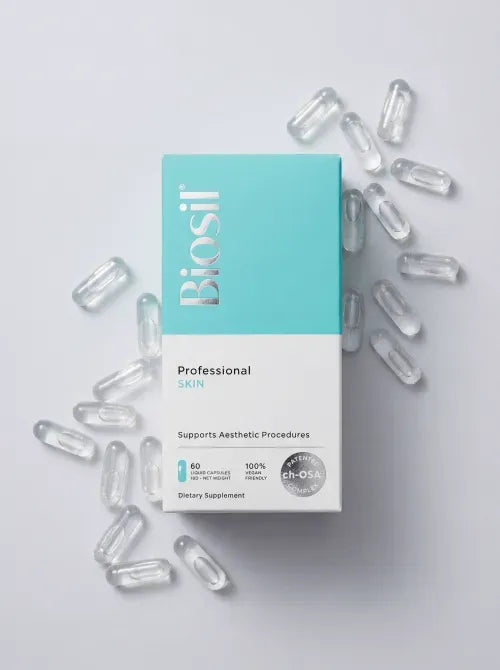
Where nutrition fits in: gum tissue is collagen-rich, and silicon (as ch-OSA®) is thought to support the body's own collagen formation generally, not graft take itself. Use it only as a nutrition adjunct alongside, never instead of, your periodontist's care.
New to this molecule? What is ch-OSA®?
Gum Graft Failure: Warning Signs and What to Do
Gum graft success rates are high, commonly cited at over 90 percent. Failure is uncommon, but knowing the signs lets you act fast if something is off. The factors that shape how smoothly a recovery goes, alongside the red flags worth watching for, are laid out in our guide on what affects gum graft surgery recovery.
Signs of a failing or failed gum graft
Watch for a graft that turns dark, gray-brown, or black and then sloughs or detaches; increasing pain after the first few days; persistent swelling; pus, a foul taste, or a bad odor; or a fever. A pale or white graft in the first weeks is normal and is not failure. The concerning pattern is tissue that darkens and separates, especially paired with worsening symptoms.
What causes a gum graft to fail (smoking, disturbing the site, infection)
The most common contributors are smoking, which significantly impairs blood supply and healing; physically disturbing the site (straws, poking, aggressive brushing, vigorous rinsing); inadequate blood supply to the graft; and infection. Most failure causes trace back to either compromised circulation or mechanical disruption, which is why the early restrictions exist.
When to call your periodontist immediately
Call right away for heavy bleeding that will not stop with gentle pressure, signs of infection (pus, fever, spreading swelling, foul taste), severe or escalating pain, or a graft that has visibly detached. Quick action gives your periodontist the best chance to address the problem. Untreated periodontal issues can also progress toward outcomes like peri-implantitis treatment needs around implants, so do not ignore warning signs.
How to Speed Up Gum Graft Recovery (and Mistakes to Avoid)
You cannot rush biology, and no product or trick shortens the underlying healing timeline. What you can do is remove the obstacles that slow healing and avoid the mistakes that compromise results. That is the honest version of "speeding up" recovery: not adding magic, but subtracting harm. If you want the do's and don'ts collected in one place, our gum graft aftercare checklist pulls them together.
Habits that help the graft heal faster
- Protect the clot: no straws, no smoking, no vigorous rinsing in the early days.
- Follow the soft-food timeline and keep chewing off the graft.
- Take medication on schedule and use ice early to control swelling.
- Rest on day one and avoid strenuous activity for about a week.
- Keep the area clean with gentle rinses as directed.
- Eat a varied, protein-aware diet to support your body's general healing capacity, and discuss any supplements with your treating clinician.
- Attend every follow-up so your periodontist can catch issues early.
Common mistakes that compromise results
- Using a straw or smoking in the first days (top cause of preventable problems).
- Brushing or flossing directly over the graft too soon, or using an electric brush or water flosser near the site.
- Eating hard, crunchy, hot, or spicy foods early.
- Constantly checking the site by pulling the lip or probing with the tongue.
- Returning to intense exercise too quickly.
- Mistaking a normal white graft for failure and disturbing it out of worry.
Your follow-up appointment schedule
Expect at least one early visit around 1 to 2 weeks for a check and possible suture removal, followed by periodic reviews as the graft matures over the following months. Your periodontist tailors this to your graft type and healing. Keep these appointments even if you feel fine, since maturation happens well after comfort returns.
Sources
- Cleveland Clinic. Gum Graft Surgery: What it Is, Procedure & Recovery. my.clevelandclinic.org
- Cleveland Clinic. Gum Recession: Causes, Prevention, Surgery & Treatment. my.clevelandclinic.org
- Yaghobee S, et al. A 3D Digital Analysis of the Hard Palate Wound Healing after Free Gingival Graft Harvest: A Pilot Study in the Short Term (palatal donor-site wound healing, PMC). pmc.ncbi.nlm.nih.gov
- Reffitt DM, et al. Orthosilicic acid stimulates collagen type 1 synthesis and osteoblastic differentiation in human osteoblast-like cells in vitro (cell-culture study). Bone. 2003. pubmed.ncbi.nlm.nih.gov
- Spector TD, et al. Choline-stabilized orthosilicic acid supplementation as an adjunct to Calcium/Vitamin D3 stimulates markers of bone formation (PINP): randomized, placebo-controlled trial in osteopenic females. BMC Musculoskelet Disord. 2008;9:85. pmc.ncbi.nlm.nih.gov