Is joint pain always caused by menopause?
No. Muscle aches and joint pains can accompany the menopausal transition, but injuries, osteoarthritis and inflammatory conditions can also occur during these years. Pain beginning alongside hot flashes or changing periods is useful information for a clinician. It is not enough to identify the cause or select a treatment.
The location, duration and pattern matter. Note whether stiffness follows rest, whether the joint is swollen and which activities are difficult. A painful shoulder and several swollen finger joints may require different assessments. The menopause and collagen evidence guide gives broader context without explaining every joint symptom.
When should you seek medical advice?
Seek assessment when pain persists, recurs or interferes with sleep, work or ordinary activities. A hot, swollen joint or pain with fever needs urgent medical attention. Severe pain after an injury, inability to bear weight or an obvious deformity warrants emergency assessment, rather than a trial of supplements.
Information that helps a joint-pain consultation
| What to describe |
Useful details |
Why it matters |
| Location |
One joint or several; one side or both |
The distribution helps guide examination |
| Timing |
When pain started, morning stiffness and changes with activity |
Different patterns can point toward different causes |
| Other signs |
Swelling, warmth, redness, injury or feeling unwell |
Some combinations need urgent care |
| Impact and medicines |
Sleep, walking, work, prescribed drugs and all supplements |
These help set care priorities and check treatment safety |
This is a way to prepare for an examination, not a diagnostic checklist. Do not assume that a familiar menopause symptom explains a new, severe or changing problem. Bring the details that would otherwise be hard to remember during a short appointment.
What has stronger support than choosing a supplement?
The answer depends on the diagnosis. For osteoarthritis, NICE places tailored therapeutic exercise, information and support at the center of care, with weight management when appropriate. Exercise may initially cause discomfort; an individual program helps establish a manageable starting point and progression. Advice for diagnosed osteoarthritis cannot automatically be applied to an unexplained hot or swollen joint.
Menopause care is a separate discussion that can happen at the same appointment. If vasomotor symptoms, sleep disturbance or other changes are troublesome, ask about the relevant options and their individual benefits and risks. Neither a supplement label nor the presence of joint pain alone determines whether menopausal hormone therapy is appropriate.
How should supplement evidence be compared?
Start with the question you want answered: less pain, easier movement, or a change in a laboratory marker? These are different outcomes. A study of bone formation does not demonstrate pain relief, and a trial involving men cannot establish the same effect in postmenopausal women.
Check the exact ingredient, population, comparison group and duration. A report that participants improved from their starting point is less informative than a clear difference versus placebo. Symptoms can fluctuate and both groups can improve. A positive result in one subgroup should be read alongside the main study result, not used to hide it.
Recommendations also vary by ingredient and condition. For example, NICE does not recommend glucosamine for managing osteoarthritis because strong evidence of benefit is lacking. That is a specific recommendation for osteoarthritis, not a verdict on every product or every cause of pain around menopause.
What did the ch-OSA knee trial find in women?
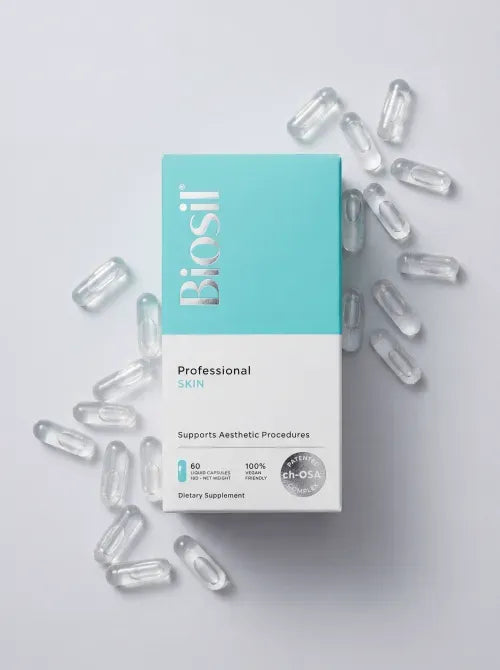
Geusens and colleagues studied choline-stabilized orthosilicic acid, or ch-OSA, against placebo for twelve weeks in symptomatic knee osteoarthritis. The trial randomized 211 people. Its per-protocol analysis included 166 participants, with 120 women and 46 men. Almost all the women were postmenopausal.
No benefit was found in the overall population or in women. Improvements in some secondary symptom scores were observed in men; the main pain outcome in men showed a favorable trend rather than a significant treatment effect. These findings do not support recommending ch-OSA to relieve menopausal joint pain.
Bio Minerals funded the trial and supplied the study products. Exclusions from the analysis and limited subgroup sizes also affect interpretation. A negative result over twelve weeks does not answer every future research question, but a suggestion to study longer treatment is not evidence that a longer course works.
The background on the ch-OSA compound explains what was studied. Keep that ingredient description separate from an efficacy claim. The Biosil clinical study library offers further publications; each must be read for its own population, endpoint and limitations.
What should you discuss before taking anything new?
Tell your clinician or pharmacist which symptom you want to address and show the complete product label. A nutrient deficiency, when identified, has its own management. It should not be assumed from joint pain alone. Different formulations also have different ingredients and interaction considerations.
Vitamin K, for example, can interact with warfarin and related anticoagulants. A reassuring statement about one ingredient does not establish the safety of a whole formulation. Record what you already take and do not replace prescribed care because a supplement is marketed for menopause.
The study limit matters: ch-OSA did not show a benefit in women in the twelve-week knee osteoarthritis trial. This does not support a menopause joint-pain claim. Discuss any supplement with the clinician assessing your symptoms.
Sources